THE IMPACT OF ARTIFICIAL INTELLIGENCE ON PURCHASING, FROM THE WORLD OF GAMING
With technology advancing at full speed, artificial intelligence (AI) is making its presence felt in almost every part of our lives. Professionally, I work in procurement—an area that demands strategic decision-making in the private sector. Outside of work, I often dive into the world of gaming. And in both arenas, AI’s growing influence is fundamentally reshaping how strategic decisions are made.
AI, video games, and business… At first glance, they may not seem easy to connect. But together, they form a triangle where being at the center can be surprisingly productive.
AI in Games: Algorithmic Decision Systems and Their Impact on Business
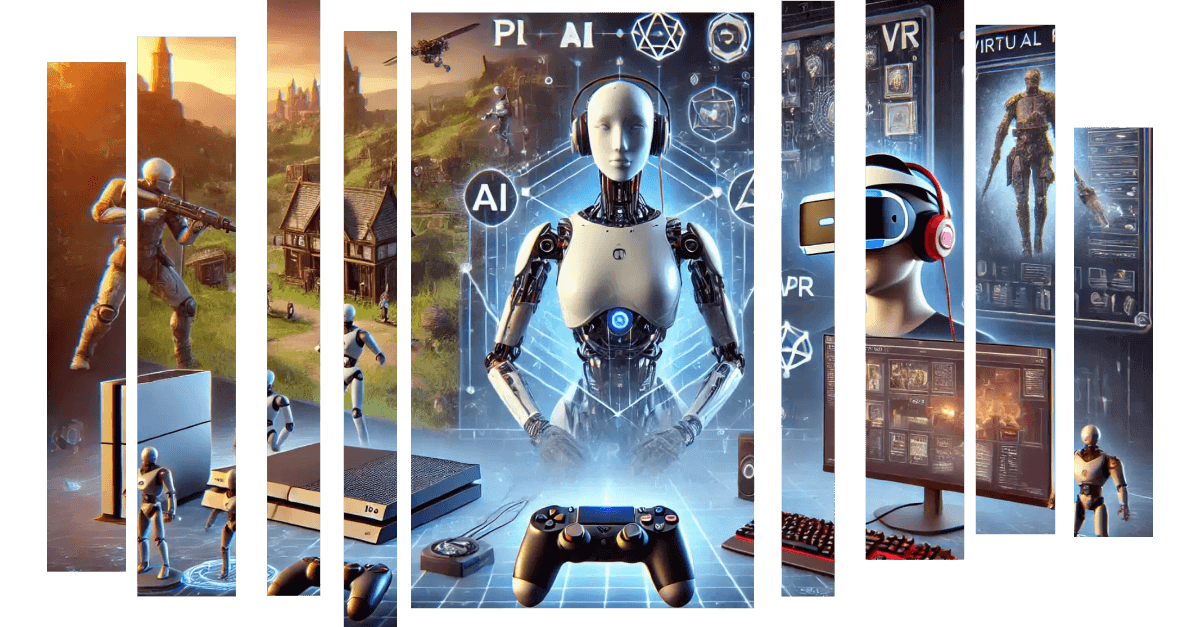
In gaming, AI both enriches the player experience and operates through complex decision trees. Algorithms such as Monte Carlo Tree Search (MCTS) and Deep Reinforcement Learning (DRL) are widely used—especially in strategy games—to predict an opponent’s next moves and generate effective responses.
These systems analyze a player’s past behavior to create dynamic, adaptive opponents. Models in the spirit of “AlphaGo,” for instance, don’t just follow predefined rules; they can also develop their own strategies through experience as the game unfolds. That’s why the challenges we face in games often feel more complex—and more realistic—over time.
And these approaches translate directly into business. In procurement, AI can process large datasets to analyze supplier pricing patterns, giving decision-makers the advantage of moving faster and with greater foresight. The same dynamic analytical capability that makes game AI formidable can help businesses adapt to competitive market shifts and adjust strategies in real time.
AI in Business: The Transformative Power of Data Analytics and Predictive Modeling
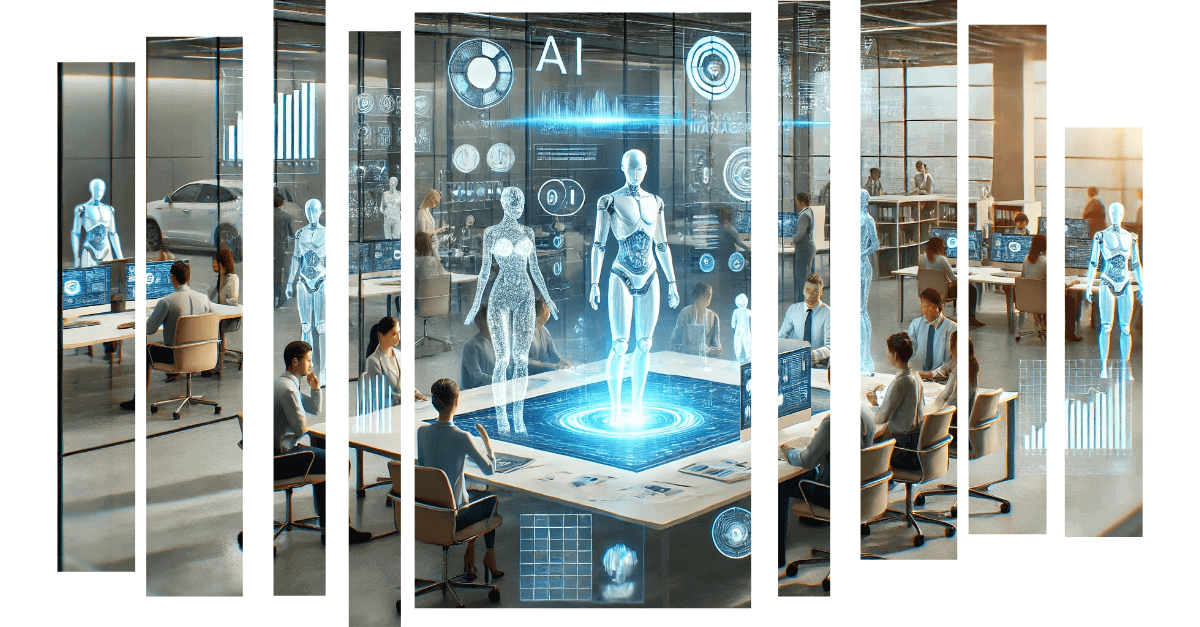
In private-sector procurement, AI plays a critical role—especially in data analytics and predictive modeling. Using machine learning (ML), AI can analyze historical purchasing data and forecast market trends. With methods such as regression models, clustering techniques, and natural language processing (NLP), it becomes possible to evaluate supplier performance and identify the most effective pricing strategies.
As a procurement professional, AI-based analytics platforms allow me to conduct supplier risk assessments more efficiently. Algorithms can examine past delivery performance and predict potential delays before they happen. On top of that, automated decision-support systems can use sophisticated decision trees to help identify the most advantageous supplier.
This shift replaces manual processes with data-driven automated systems—reducing error rates, speeding up decision-making, and maximizing workforce productivity.
Strategic Decision-Making: New Approaches Through Game Theory and AI Integration
When it comes to strategic decisions, AI becomes even more powerful when integrated with game theory models. Game theory is a mathematical framework used to analyze decision strategies in competitive environments. In procurement, AI can leverage theoretical models such as Nash equilibrium to recommend optimal negotiation strategies.
For example, during a purchasing negotiation, AI can evaluate the other party’s potential offers and generate the best possible response. Multi-agent systems can simulate decisions made by different stakeholders and optimize complex negotiation scenarios. This moves procurement decisions onto a more analytical, data-based foundation.
In games, AI-powered systems allow players to develop dynamic responses to an opponent’s evolving strategy. Similarly, in business, it becomes possible to analyze competitor behavior and market reactions in real time—then adapt accordingly. The result is greater flexibility and stronger strategies when facing unexpected situations.
AI and the Role of Games in the Future of Procurement
In the future, AI and game-based simulations will play an even larger role in business. For instance, natural language processing and computer vision could enable automated contract analysis. In supply chain optimization, AI will be used more extensively to reduce logistics costs and improve demand forecasting.
Simulation-driven AI systems developed in gaming can also be applied to business to model and test decision-making processes. Especially in complex and uncertain conditions, these systems can help minimize risk and support more robust decisions.
In short, AI and gaming technologies are transforming how we think strategically in business. In data-heavy, high-stakes areas like procurement, AI-supported systems reduce error rates and accelerate decision-making. Meanwhile, games provide a powerful way to simulate complex scenarios—building stronger analysis and planning capabilities. Together, this transformation points toward smarter, more predictive, and more flexible business processes.
Bonus: Game Recommendations
To understand AI and strategic decision-making, the gaming world functions like a practical laboratory. Games that simulate complex scenarios and sharpen decision skills can offer valuable lessons for AI-supported strategic thinking in business. Here are a few standout examples:
Civilization Series Requires deep decision-making across diplomacy, resource management, and military strategy. AI-driven opponents react dynamically to your choices. It strengthens long-term planning, resource optimization, and the ability to adapt to shifting “market-like” conditions.
Frostpunk Series You manage a society under extreme resource scarcity, making both moral and strategic decisions. It improves crisis management and risk assessment—and offers hands-on practice in choosing the right strategy under supply constraints.
Europa Universalis IV A historical simulation that spans global diplomacy, trade, war, and colonization. It builds skill in complex geopolitical dynamics and long-term planning. It also mirrors global supply-chain structures that are highly relevant to procurement strategy.